Ocala Anime-Fest 2026 Review

The third anime convention of the year was filled with an unexpected twist—one that raised my expectations even higher in an area I’m already very familiar with!

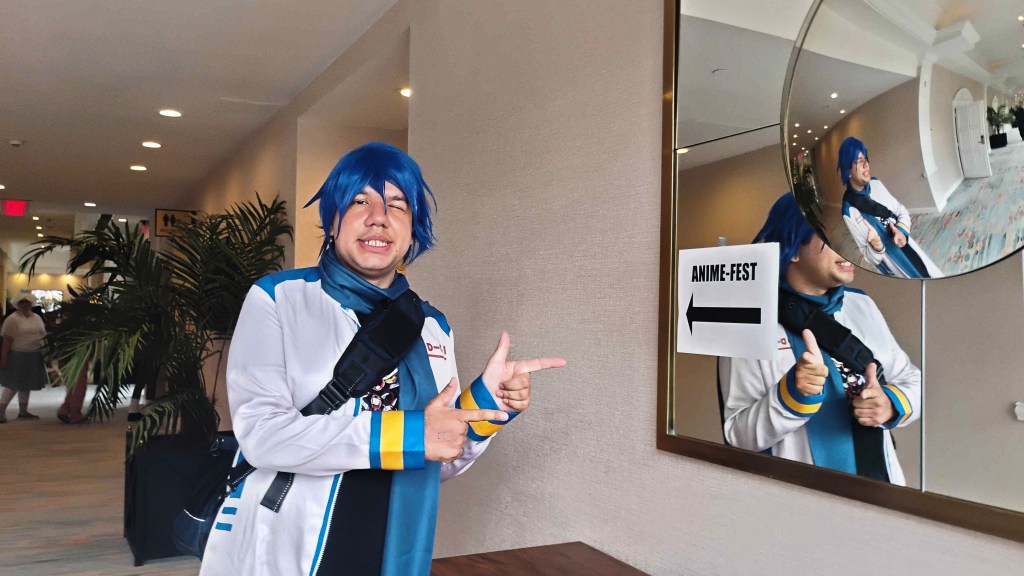
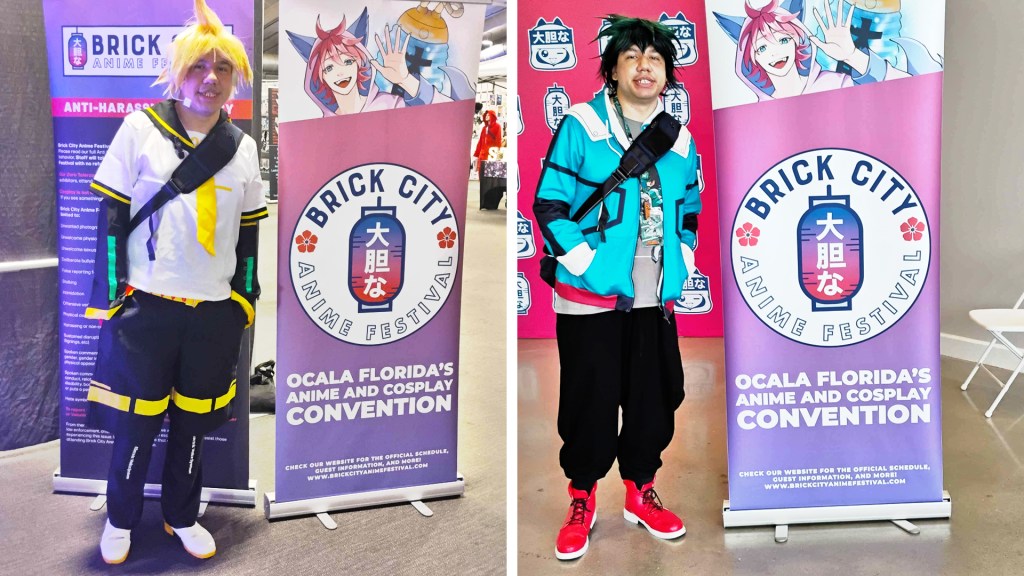
By the time I publish this article, there’s one thing I can definitely tell you: I’m already very familiar with the city of Ocala as a whole. It all started way back with Ocala Comic Con in 2023. Since then, I’ve attended at least four events there in total—and five if we’re counting repeat yearly ones. So what is this anime convention I’m talking about? Well, it’s Ocala Anime-Fest, another anime con from OurCons—the same awesome group behind Sarasota Anime-Fest, which I attended (the second one) on December 6, 2025. Held at the Hilton Hotel in Ocala, this was my second time visiting that hotel, with the previous visit being for OGPokeCards (OG Con) on August 30 of last year. Not only that, but I was also pleased to cosplay as Kaito from Vocaloid—my first brand-new cosplay since Len Kagamine’s for Sarasota Anime-Fest. So far, he’s been the best and my favorite to cosplay! I can’t wait for more cosplay in the future!

Ocala Anime-Fest 2026 came out of nowhere! Just as I was about to finalize my entire calendar for my 2026 anime convention plans in 2025, it suddenly popped up, bringing me a ton of great excitement. Hilariously, though, right after I moved my base from Ocala to Tampa, Ocala starts lighting up my otaku radar again—after a few years of barely anything happening there except Ocala Comic Con and Brick City Anime Festival (both of which I’ve already attended). Nonetheless, I was utterly pleased to learn that the Horse Capital of the World now has another anime con to check out.

Another interesting part is that this year marked the first inauguration of Ocala Anime-Fest. This anime con in Ocala is completely brand new and still so young. So just knowing that I was able to attend its very first year gives me yet another cherished memory and another personal achievement that I’m really happy to have experienced. So, how did this newcomer do? What great magic did this anime con have in store for me?

Continue reading
The Anime Tourist Controversy: My Brutal And Honest Opinion

Anime’s popularity has tremendously grown in recent years, but, behind that growth left behind a backdoor that has become rife within the community.

For the longest time, the global popularity of anime and manga has continued to rise dramatically. Our medium has become so mainstream and beloved that it’s no longer uncommon to encounter fellow fans almost anywhere. This holds true not only in sparsely populated regions of the United States, but even in countries around the world that have little to no historical or cultural ties to Japan and where the market for anime and manga remains relatively small.

Of course, like all interests, new fans naturally enter fandoms as their popularity grows. When newcomers arrive, controversy often follows, and longtime members frequently take issue with the “hot takes” these newcomers share. These opinions might concern quality judgments, preferences between modern and classic favorites, or challenges to the common practices and core beliefs that the older community has established—especially when those views clash with what the creators of the series themselves believe in.

As we all know, anime and manga are no exception to this pattern. The medium continues to experience unprecedented global growth, expanding the fandom dramatically. But the key question remains: Is this rapid growth ultimately good for anime and manga?

Lately, there has been a wave of controversy in the anime community. What exactly is this controversy about? It centers specifically on the influx of newer anime and manga fans. At first glance, this might seem like the typical case of gatekeeping in a fandom. However, as you take a closer and deeper look into the issue, you’ll see that this controversy is actually a bigger problem than most people realize. It even has its own official name: anime tourism (often shortened to “anime tourist” as a pejorative label). So, what exactly is “anime tourism”?

Continue reading

Brick City Anime Festival 2026 Review

New year, new beginnings, and new otaku fun! 2026 is off to a roaring start with a new anime convention. A first-time as well!

2025 was a difficult year for me. I missed out on basically the entire calendar of anime conventions, along with several important social events I really wanted to attend but was unable to. It really sucked… I was devastated and genuinely mourned missing what felt like a huge year for anime conventions. To add insult to injury, it all happened in Florida—the state with one of the greatest landscapes of otaku life and the third-largest number of anime conventions in America. In the end, I only managed to attend a few tiny events, while still missing out on all the big ones.

So, for 2026, I didn’t want the same mistake to be repeated. Toward the end of 2025, as all the great anime cons were wrapping up, I only managed to attend Sarasota Anime Fest in December. With everything ending and the year coming to a close, I dove into some heavy planning for 2026. My first objective was to make sure that, in 2026, I would prioritize cosplay and anime conventions. I decided to put aside my constant focus on merchandise like anime figures, Gunpla, plushies, and J-pop/idol albums. I also toned down my consumerism when it came to anime, manga, and physical video game media, saving up only for cosplay and anime conventions. While the circumstances in 2025 hadn’t favored me at all, I also made some personal mistakes that year that contributed to those blunders. Eventually, Brick City Anime Festival became the first anime con already planned for 2026—and how did it turn out?

I was finally able to experience my first ever multi-day medium-sized anime convention: Brick City Anime Festival 2026, located in Ocala, Florida, and held at the World Equestrian Center. It was first inaugurated in 2022, and this year marked its 5th year—boy, was I glad to have experienced it. The overwhelming amount of fun stuff that happened at Brick City Anime Festival was amazing. It was an anime con full of great things, ranging from incredible cosplay, a welcoming community, idolfests, and so much more. So, how was it for me? How was my first ever anime convention of 2026?

Continue reading

Hideaki Anno: “I’m sorry, but the audience will have to be the one to adapt.”

Death taxes and anime controversy. Ever since I started Animangemu, controversial topics with hot takes by famous figureheads of the anime industry have somewhat become the norm. Of course, this isn’t new, and this phenomenon dates back decades. Either it was Hayao Miyazaki saying that anime is made by people with unrealistic expectations—in a negative tone—which people mistakenly thought meant “anime is trash and was a mistake.” Nowadays, controversial issues have gotten more notable and a lot more common, especially this year in 2025.

Now Hideaki Anno joins the scene, and although he’s made previous controversial statements before, this one is his latest. But is it really controversial? According to some fans, it is—for them—and the reason why is clear. In a recent Forbes Japan interview, Anno stated that creators should not adjust anime for overseas or global audiences, emphasizing that works must first succeed domestically in Japan, and adding, “I’m sorry, but the audience will have to be the one to adapt.” Some fans (especially in Western discussions on platforms like Reddit and X) find this controversial because it feels like a rejection of global inclusivity, a pushback against localization pressures, or even a dismissal of “modern audience” sensitivities. Others, however, praise it as a defense of authentic Japanese storytelling against homogenization.

As we all know, in terms of popularity and industry business practices, anime as a whole has indeed globalized. Anime is more popular than ever, and people are watching anime—both old and new—racking up DVDs, buying up all the manga, and hogging all the merchandise. This year, we saw three anime movies dominate the box office worldwide: Demon Slayer: Infinity Castle, Chainsaw Man: The Movie – Reze Arc, and Jujutsu Kaisen: Execution. All three enjoyed unprecedented success at the box office in Japan and internationally. Most notably, in countries like the United States, China, and numerous nations in Southeast Asia and parts of Europe, anime has not only enjoyed explosive popularity but has equalized—and even dethroned—once long-time pop culture favorites among the locals.

So, with such success globally, it’s no surprise that a critically acclaimed and legendary director like Hideaki Anno would be asked such a question. So, what’s going on exactly, and what did he say?

Continue reading

The Return of My Passion For Anime and Manga: A 10th Anniversary Special

Expect Good News This Year – God

And all of the glory goes to the Almighty God above the beautiful heavens. Thank You, my Holy Father, for bringing this beautiful passion of mine back to life. What you just read isn’t merely an anniversary reflection—it’s a living testimony from me. This wasn’t just some random story that happened. It was a beautiful promise given to me by my Almighty God, foretelling good news that would come into my life, and in the end, it did happen—exactly as He said it would. Every single paragraph, every action, every turning point, every moment of heartbreak and rebirth… all credit, all praise, and all glory belong to Him alone—the Almighty God of Glory! Amen! – Kurai

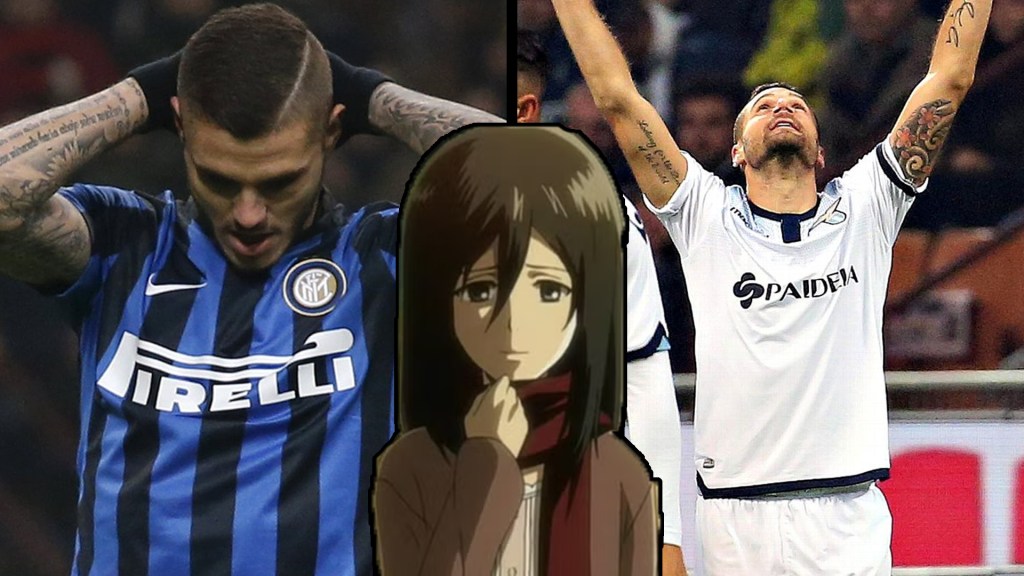
On December 20, 2015, in the 87th minute of a Serie A match between Inter Milan and Lazio at the San Siro, Felipe Melo conceded a penalty with a reckless challenge on a cold late-autumn afternoon. Antonio Candreva stepped up and calmly converted the spot-kick, restoring Lazio’s lead. In the end, Lazio claimed the three points they desperately needed, leaving the San Siro stunned. Among those stunned was me—a passionate, 18-year-old Inter supporter watching from across the Atlantic in the Sunshine State. It was a typical gray, cold, cloudy day in the suburbs of Orlando. In a surge of rage, disappointment, and sheer exhaustion from years of constant Nerazzurri heartbreak, I hurled my slipper to the ground.

That moment crystallized something for me: the Nerazzurri were going to disappoint their faithful once again. After years of mediocrity—and with more to come—Inter had a well-earned reputation for spectacular collapses after crucial defeats like this one. Sure enough, the team imploded. They fell from 1st place to 4th by January, were out of the title race by March, and had dropped out of the Champions League qualification spots by May. It was a collapse so predictable it almost felt scripted. After that Lazio loss, I finally realized: enough is enough. I was tired of getting so worked up and heartbroken over something that, deep down, wasn’t even a true passion of mine anymore. I was tired of the stress, the anger, and the emotional rollercoaster over something that ultimately had very little real significance in my life. Most of all, I was tired of wasting time on a hobby that no longer brought me joy—time I could be spending on something I truly loved and wanted to build a future around. When those feelings finally surfaced, only one thing came to mind: anime, manga, and the otaku life I had once embraced so fully. After years of drought, with that passion lying dormant, something awakened inside me. I told myself: Kurai, it’s time to change course. Enough is enough. Stop wasting your energy on a team of billionaires living their dreams on the pitch, and start chasing your own. A few days later, on December 25, 2015, I began watching Attack on Titan. I finished the season on December 30.That week marked the moment I finally turned the page.

The question you’re probably asking is: what the heck does this have to do with anime, manga, and my otaku life? Well, please sit back, buckle up, and get ready—because this is the story of one of the most important turning points in my life. It’s exactly how my passion for anime and manga came roaring back. I first became an otaku in 2011, but between 2012 and 2015, I went through a long, slow drought. My enthusiasm faded, and I found myself feeling more miserable, depressed, and completely unable to take my otaku passion to new heights—the way you see me doing today, and the way I did for years after my revival began in 2016. In this piece, I’m going to tell you the full tale of how it all happened: how one small, unexpected moment brought me, as an otaku, back to life and led me to where I am today.

Continue reading