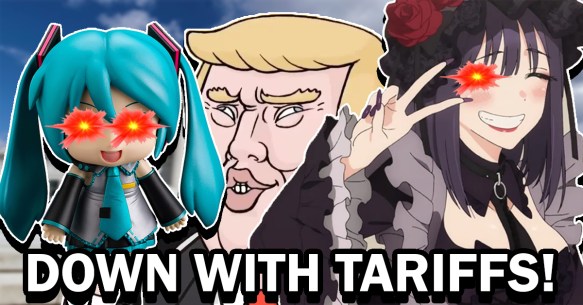
The tariffs have been a walking nightmare for us otakus. Now, with this ruling, is there light at the end of the tunnel?
Since the start of Donald Trump’s tariffs, our way of otaku life has taken a massive toll. This ranges from price increases on home media like anime DVDs and Blu-rays, manga and light novels, and—arguably the worst—merchandise goods such as figures and cosplay items. Trump’s harsh tariffs on numerous nations around the world, including the motherland Japan, as well as China and Vietnam, have driven up prices for our goods to levels never seen before. To make matters worse, other sweeping trade policies—like the removal of the de minimis exemption—have made direct imports from Japan far more difficult and expensive. The situation became such a mess that numerous Japanese companies, such as Good Smile Company, AmiAmi, Tokyo Otaku Mode, and Solaris Japan, had to temporarily suspend shipments or dramatically change their policies for online purchases to the US. Things got so chaotic that some goods were delayed or even canceled outright. Tariffs have caused horrific harm to us otakus.
Now, today—February 20, 2026—there may finally be light at the end of the tunnel. The United States Supreme Court has struck down Trump’s tariff policy. In light of the chaos and price hikes we’ve endured, what does this exactly mean? The truth is, it’s genuinely good news and a huge relief for us otakus. As we all know, these tariffs have made collecting and our way of otaku life much harder ever since they were implemented. When Trump announced the so-called “Liberation Day” last year, launching sweeping tariffs across nations—including Japan and much of East and Southeast Asia—prices exploded, and nothing has been the same since. Now, with this ruling, what will happen next?
Many pop culture phenomena have made history, but something about Pokémon stands entirely apart…
On October 16, 2025, people waited in line to buy the latest Pokémon game, Pokémon Legends: Z-A. It didn’t matter how long the line was—all they wanted was to buy the game, play it, and experience the magical journey that every Pokémon game has to offer. (Myself included.) Young and old—the demographics didn’t really matter. Millennial Pokémon fans in their 30s or 40s, who still felt like eight-year-olds from the late ’90s, were showing their children the magical world of Pokémon. Gen Z fans in their 20s (or wrapping up their late teens) were ready to dive into the adventure, just like they did in the 2000s and 2010s. And Gen Alpha kids were gearing up to enjoy the new Pokémon journey, courtesy of their parents. All had one thing in common: they love Pokémon. As time goes by, no matter how old they get, the feeling of playing Pokémon never gets old. As a fellow die-hard Pokémon fan, I echo the same sentiment.
By the end of the first week, Pokémon Legends: Z-A had sold an impressive 5.8 million copies worldwide. This figure, announced by The Pokémon Company shortly after the October 16, 2025 launch, included sales across both Nintendo Switch and the new Switch 2 (with roughly half on the latter platform). Lines at stores, midnight releases, and massive digital downloads proved the hype was real—fans young and old couldn’t wait to dive back into Lumiose City. Never mind that this game is simply a continuation of Game Freak’s experimental Legends series, or that first-week sales were down compared to Pokémon Scarlet and Violet’s explosive 10 million units in just three days back in 2022 (a Nintendo record that still stands). Despite the dip—placing Z-A as the fifth-best Pokémon launch ever—these numbers once again proved just how popular and beloved the Pokémon franchise remains. Another year, another blowout success. No matter how many years go by, the popularity of Pokémon never seems to age. And with the franchise set to celebrate its 30th anniversary in 2026 (kicking off on February 27 with special logos, animations, events, and more announcements on the horizon), the question begs to be asked: Is Pokémon pop culture’s greatest achievement in history?
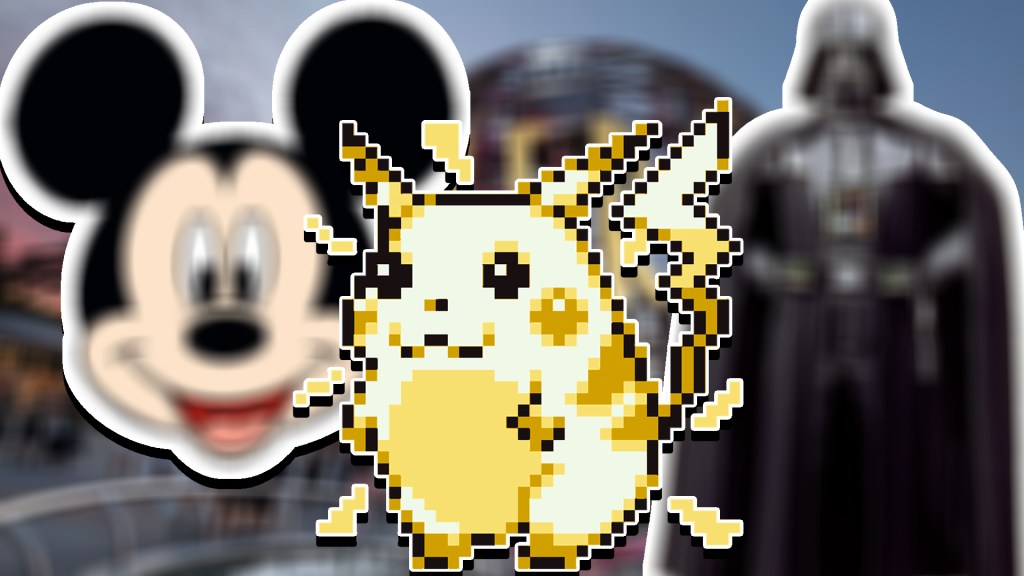
Many pop culture franchises have enjoyed tremendous success. Disney is known as an animation empire and has always summoned massive audiences. Other well-known pop culture icons—from Hollywood blockbusters like Star Wars to entertainment based on comics and art like DC, Marvel, and international phenomena such as Britain’s Harry Potter—also boast iconic status and huge followings. Yet, in spite of that, their popularity and fortune don’t even compare to Pokémon’s staggering $105–$288B lifetime revenue (with the highest estimates reaching $288 billion as of late 2025, including games, merchandise, trading cards, anime, and more). This makes the Pokémon franchise the highest-grossing media franchise in entertainment history, outpacing giants like Hello Kitty ($80–$88B), Mickey Mouse & Friends ($52–$70B), Winnie the Pooh ($48–$75B), Star Wars ($46–$70B), and the Marvel Cinematic Universe (~$30–$35B from box office alone, plus merch). Pokémon’s fans remain young at heart, it keeps gaining new generations of followers, and somehow manages to retain the old audiences who grew up with it from the very beginning in 1996. The recent launch of Pokémon Legends: Z-A on October 16, 2025—selling an impressive 5.8 million copies in its first week (with roughly half on the new Switch 2)—further proves the enduring power, even if lower than Scarlet and Violet’s explosive debut. So, for this article, I’ll be doing a deep analysis of today’s topic: Is Pokémon pop culture’s greatest achievement in history?
Death taxes and anime controversy. Ever since I started Animangemu, controversial topics with hot takes by famous figureheads of the anime industry have somewhat become the norm. Of course, this isn’t new, and this phenomenon dates back decades. Either it was Hayao Miyazaki saying that anime is made by people with unrealistic expectations—in a negative tone—which people mistakenly thought meant “anime is trash and was a mistake.” Nowadays, controversial issues have gotten more notable and a lot more common, especially this year in 2025.
Now Hideaki Anno joins the scene, and although he’s made previous controversial statements before, this one is his latest. But is it really controversial? According to some fans, it is—for them—and the reason why is clear. In a recent Forbes Japan interview, Anno stated that creators should not adjust anime for overseas or global audiences, emphasizing that works must first succeed domestically in Japan, and adding, “I’m sorry, but the audience will have to be the one to adapt.” Some fans (especially in Western discussions on platforms like Reddit and X) find this controversial because it feels like a rejection of global inclusivity, a pushback against localization pressures, or even a dismissal of “modern audience” sensitivities. Others, however, praise it as a defense of authentic Japanese storytelling against homogenization.
As we all know, in terms of popularity and industry business practices, anime as a whole has indeed globalized. Anime is more popular than ever, and people are watching anime—both old and new—racking up DVDs, buying up all the manga, and hogging all the merchandise. This year, we saw three anime movies dominate the box office worldwide: Demon Slayer: Infinity Castle, Chainsaw Man: The Movie – Reze Arc, and Jujutsu Kaisen: Execution. All three enjoyed unprecedented success at the box office in Japan and internationally. Most notably, in countries like the United States, China, and numerous nations in Southeast Asia and parts of Europe, anime has not only enjoyed explosive popularity but has equalized—and even dethroned—once long-time pop culture favorites among the locals.
So, with such success globally, it’s no surprise that a critically acclaimed and legendary director like Hideaki Anno would be asked such a question. So, what’s going on exactly, and what did he say?
Whether you like him or hate him, we can all agree on President Donald Trump’s positive achievements that he’s made in regard to freedom of speech and protection from internet censorship imposed by European governments. The first starting with the corrupt payment processors and his executive order in tackling their corruption. Secondly, his hostile and bold opposition to the insane internet censorship and surveillance that has been occurring in Europe and parts of the world lately. Regardless of your political position, right, or left, we can all agree on the dangerous consequences of censorship, corruption, and mass surveillance. Of course, that’s just my opinion.
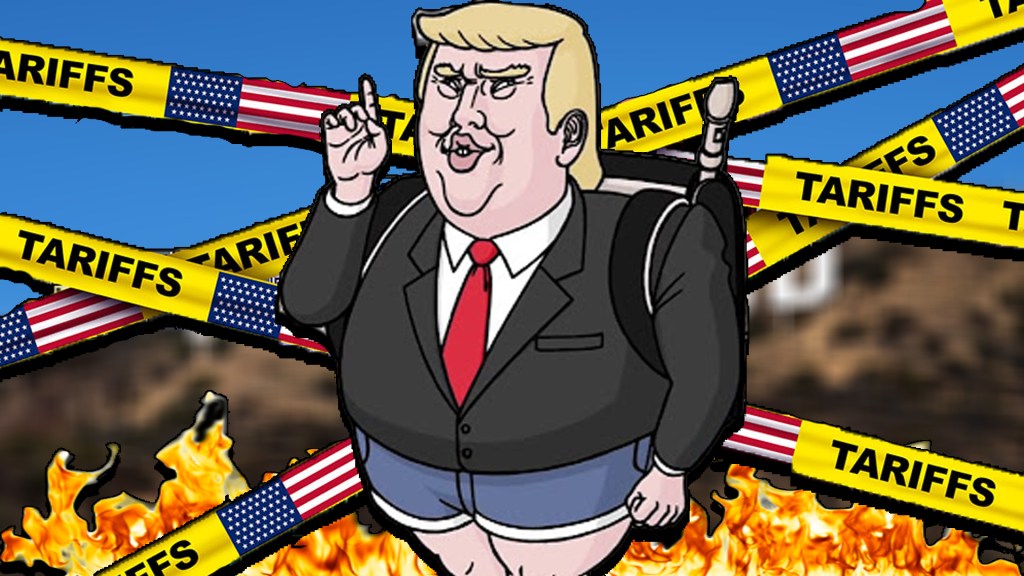
Unfortunately, there’s one glaring issue that a lot of people, including myself, can’t stand, and that’s the tariffs. The policy of tariffs has become a major issue for us, the American otaku. Ever since, the president has begun his tariffs’ policy worldwide, with the topic being specifically about Japan, the life of otaku investment on many specific goods like figures, cosplay, and other stuff have been GREATLY disrupted. From the specific tariffs on certain sections, to tariffs on other nations that contribute to making and importing these goods, and finally, the removal of the De Minimus rule that has caused a MAJOR disruption among Japanese companies that export these goods to the United States. Now, another major issue is occurring for the American otaku, and it’s the topic of foreign made films, the potential tariffs, and the impact it will have on the movie industry, but, exactly what’s going on, and should we be worried?
Ever since I’ve fallen in love with The Land of The Rising Sun, Japan has become an important part of my life. Ranging from many great things that the Japanese have invented. Anime, manga, video games, toys & games, tokusatsu, books, otaku culture niches, and other stuff like music, automobiles, inventions, technology, innovations, culture and history, athletes, language, and so much more… So, of course, what else would be on my passionate love affair for Japan? Obviously…
Food… Aka, cuisine. For my entire life, despite spending so much time investing my interests in Japan, I’ve never got to taste authentic Japanese cuisine. In fact, I’ve never even tried out or ever got the chance to eat any Japanese food whatsoever. Even when I had the chance to, such desires never materialized. The void of never trying out Japanese cuisine remained a strong enigma for me, for practically most of my otaku life since I first became one back in 2011…
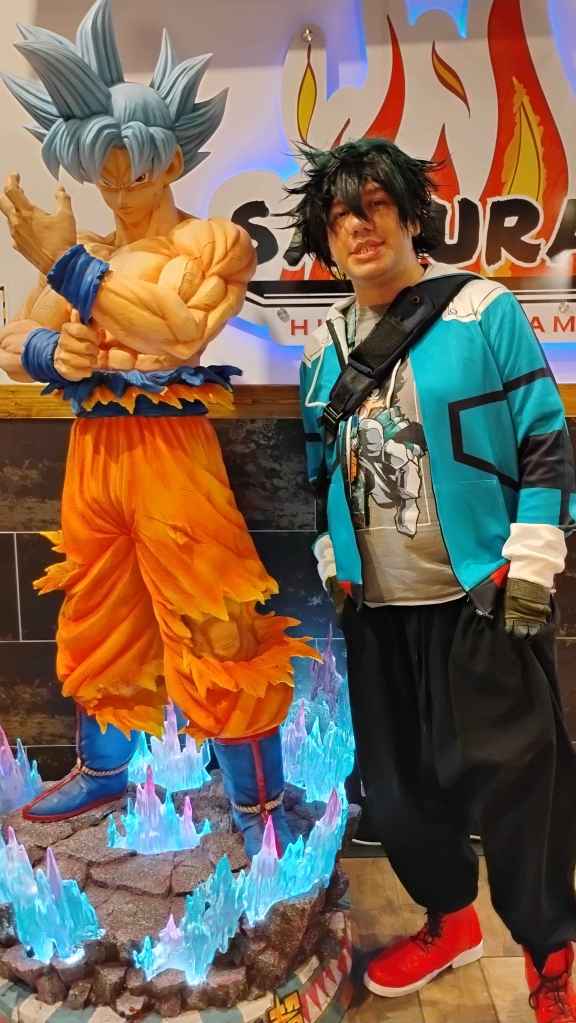
Finally, that would change at long last when I visited an amazing and awesome restaurant by the name of Samurai Hibachi & Ramen. This Japanese restaurant is located in Ocala, Florida. Oh, and guess what? This restaurant isn’t just some ordinary restaurant, it’s a Japanese restaurant that brings out the authentic Japanese feel. Not only that, but also brings out an otaku feel that even I was not expecting. This restaurant isn’t just “some restaurant”, It’s magical, and for any otaku in Florida, this is a must-visit, and I’ll tell you exactly why in this review.
Also, please enjoy my historic reveal of my cosplay, which I’ve been planning to do for ages now. (R.I.P. Anonymous Kurai: 2021-2025) Heheheh!!!

 Animangemu